Week 1 - Immersive Storytelling
- Julia Toczyska
- Sep 26, 2024
- 4 min read

Updated: Dec 23, 2024
Task for This Module
To develop an immersive story in response to the prompt: Art School Time Machine. This prompt is inspired by the graphic novel Here by Richard Mcguire, which I will cover in depth down below! Our lecturer, Emily, explained that we don't have to follow the prompt if we don't want to, however, we are more than welcome to use it for inspiration.
Checklist
To produce an imaginative work that shows creativity and engagement with the brief
Engage with a range of software and hardware to explore digitally based outcomes
Research appropriate sources and document project development
Clear self reflective process
What is Immersive Storytelling?

We started today's lecture exploring what actually is immersive storytelling? To me immersive storytelling is the ability to create a compelling story through immersive means such as - movies, video games, music, audio, and arguably the most immersive way - VR.
Immersive storytelling cannot exist without a story. A story is a narrative about events and characters that doesn't have to be based on real life events. A good story, is compelling and is not afraid to make statements. A story can be anything that it's creator want's it to be.
Rebecca Solnit in her work 'The Faraway Nearby', presents a fascinating description of stories as tools we use to navigate the world and construct our personal realities, whether as sanctuaries or prisons. Her analogy of being "lost in the vastness of a world that spreads in all directions like arctic tundra" powerfully conveys the essential role stories play in our life.
What is Immersion?
Immersion is the state of being completely absorbed by a story. Immersion can be both fascinating and terrifying at the same time, and that is exactly why I find it so interesting. I always found myself drawn to stories or games where I can completely lose myself in, for example MMORPGS were always a huge part of my life. Things that can help consumers immerse themselves into a story are: high production, a compelling narrative, passion in the product, and a lot of skill and talent.
As we spoke about immersion, I suddenly remembered one of those late 2000s mobile apps people used all the time back then. The beer drinking simulator (video above) or the silly shaver simulator people used all the time to pull pranks. The concept was simple yet somehow managed to be so immersive? Perhaps immersion isn't just all about realism, but engagement.
Virtual Reality

When talking about immersion we have to consider comfort. Nowadays, people are quick to point to VR as 'the ultimate form of immersion', but is VR really that great? I always found myself quite sceptical of VR, to me it always seemed headache inducing, with its heavy weight and swimming goggle like appearance. Its almost like having suction cups on your eyeballs. I might be too harsh, I can see the potential in VR, but at the same time I am still a mouse and keyboard kind of person.
Here by Richard Mcguire
Here by Richard McGuire is a graphic novel that creatively explores the concept of time and storytelling through a single location, a living room. The narrative unfolds in a series of overlapping panels that depict the same space across different eras, from prehistoric times to the distant future.
The storytelling in Here is nonlinear and fragmented, reflecting the way memories and histories overlap. This approach challenges traditional narrative structures, emphasizing the layers of meaning within a single space. Through its visual storytelling, Here invites readers to reflect on memory, existence, and the ways in which stories are intertwined across time. The storytelling in Here was a huge inspiration for me while coming up with the concept of my project.
Initial Story Idea


For this project I have paired up with my classmate Cassie!
With the Prompt "Art School Time Machine", we came up with the idea of a short narrative driven game - strongly inspired by Here. The game would centre around the player traveling through a mysterious Art School corridor. The goal is for the player to find out where they are and how to get out. The corridor is filled with doors into different intimidating rooms. As the player explores said rooms they realise that they somehow found themselves time travelling, as the classrooms seem to be literally taken out of different eras. The story is told through posted notes (left by other explorers) and items they find. The more they explore the more they find themselves engulfed by this mysterious place.
point and click OR 3D
horror / mystery
Exit 8 (never ending aesthetic)
Outlast 2 (school corridors)
superliminal (dream like)
Twine

Twine is a tool for telling interactive, nonlinear stories, that doesn't require the user to write that much code to create a simple story. During the second part of the lecture we explored Twine and the ways in which it can be used for storytelling. I found Twine to be a great testing ground for short narratives! If things go south, I can imagine moving my project onto Twine to create a decent prototype for the game.
My Experiments With Twine
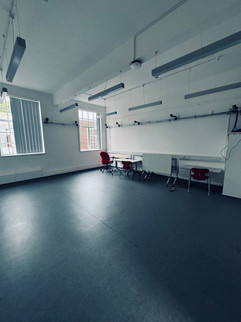
Whilst experimenting with Twine, I took multiple photographs of the ARU corridors, and created a short test for my narrative. The idea was, you spawn in the corridor, walk up to a door, go inside the room, leave the room, go back to the corridor. Simple stuff right? The photos are not perfect, but good enough to get us started. I've ended up tempering a little bit with the photos to make them appear more moody, cold (kind of like the twilight filters now that I think about it).




Outcome
Here's a quick test run of Twine I have created. Overall, I am still of the opinion that Twine can be a great way of creating short narratives, however, I still found it to be a bit painful to deal with. Figuring out how things work and how to add images took me a bit, however, I imagine Twine will only get easier the more I get used to its features. The video above is definitely something... I imagine I missed something when it comes to image size. If I revisit Twine in the future, I will make sure to properly to double check my image size!
Comments