Trimester 2 of Immersive Storytelling
- Julia Toczyska
- Apr 21, 2025
- 5 min read

Updated: Apr 26, 2025
At the start of Trimester Two, I made the decision to move our project over to Miro, an online collaborative whiteboard platform that we had already used successfully in previous modules and mini projects. I found Miro to be much more cohesive and better suited for managing a large scale project like ours, and I’ll be linking it later in this blog post as well as evaluating the project as a whole. However, before diving back into the world of Captive, I wanted to first reflect on another immersive project I undertook earlier this trimester, the Kite Navigator installation for the Together Culture.
The Kite Project
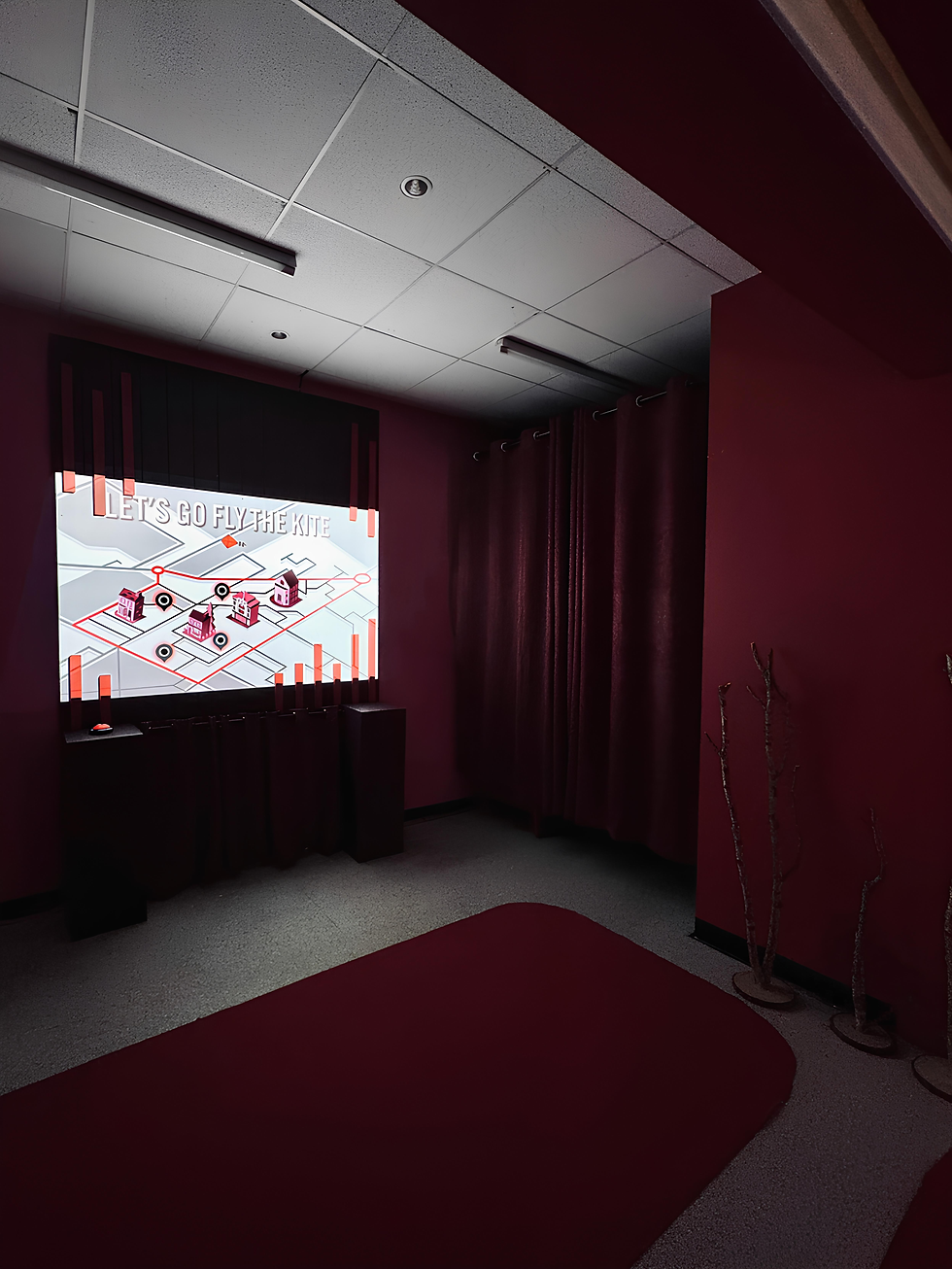
Working as a student on a client project for the first time was both exciting and daunting. I took on the creative lead role for the exhibition, working closely with StoryLab researcher Violeta, and it was incredibly satisfying to see how we managed the project together. Over the tight schedule of only three weeks, we collaboratively built an interactive exhibition for the Kite Festival in Cambridge, where we brought to life local heritage stories through an interactive touch based map installation. You can read more about the project development on the official StoryLab website here.
Leading this project taught me how to communicate in a professional creative space and how to effectively collaborate with others under time pressure. I adapted to different roles, helping with video editing, filming, designing artwork, physically building the installation from scratch, and managing my university workload at the same time. It was a valuable insight into the real world creative industry and helped me build crucial skills like quick problem solving, teamwork, and time management.
Captive Miro Link
Project Evaluation
One of the things I’m proudest of with Captive is how immersive it ended up feeling. From the very beginning, we wanted the player to feel like they were inside someone’s mind, not just watching a story happen, but experiencing it from the inside out. And I think what really makes it immersive is how all the pieces - visuals, sound, atmosphere, even the way you move through the world - are working together to pull you deeper into that emotional space.
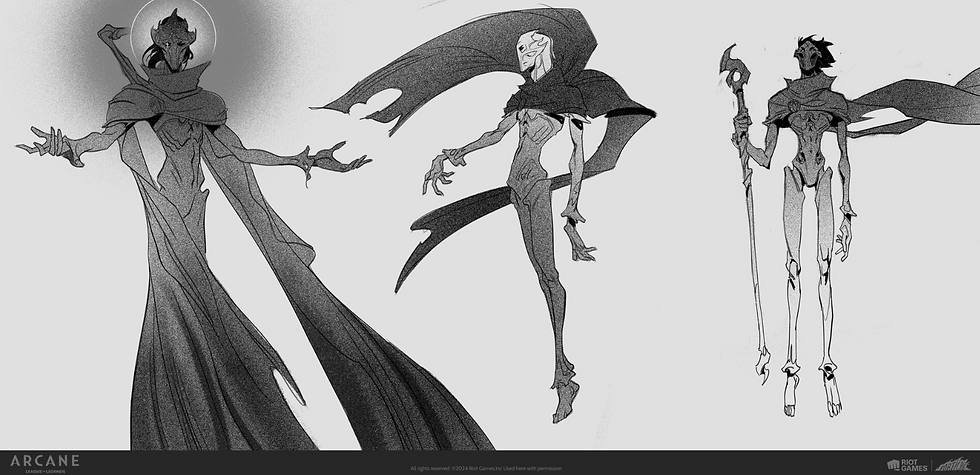
We put a lot of emphasis on storytelling through visuals. Instead of explaining everything through dialogue or text, we tried to let the world itself show the story. Every character design is packed with symbolism that reflects their emotional state. Like, Depression isn’t just sad, she's literally weighed down by hands, clawing at her, dragging her down. Bargaining is a trapped nun, endlessly pleading with something unseen. These images stick with you because they feel like emotions you’ve had but maybe couldn’t put into words. It’s not about logic, it’s about atmosphere, about feeling.
The environments work the same way. We wanted every hallway, every room, to feel slightly wrong, like something you can’t quite put your finger on. The doors that suddenly appear, the unsettling length of the corridor. It's disorienting on purpose, because grief and loss are disorienting. You don't know which way is forward. You start to doubt your own senses. By stripping away UI clutter and keeping interactions simple - opening a door, using a flashlight - the player focuses more on being there instead of managing systems or objectives.
Sound design was another huge part of building that immersion. We used a lot of ambient noise to make the player feel unsettled even when nothing obvious is happening. You’re constantly on edge, waiting for something, but you’re not sure what. It's a really emotional kind of horror, not jump scare horror, but the slow kind that gets under your skin.
At one point, I even dreamed about making a physical installation of Captive, like setting it up in a dark photography studio with directional speakers. We didn’t have the resources for it, but even the mock-ups made me excited because it felt like that’s what Captive is really about: not just playing the story, but living inside it.
I think what makes Captive immersive, more than anything, is that it’s emotionally honest. We weren’t trying to make something just spooky or stylish. We wanted players to feel what it’s like to be trapped in your own grief, how it loops, how it tricks you, how sometimes even the exit looks suspicious. And when all the elements, such as visuals, sound, space, character, are pulling in the same emotional direction, you stop thinking about it like a game. You just feel it. That’s the magic we were chasing.
Given that we made Captive in just three months, I’m honestly amazed at how much we managed to pull off. Of course, there’s always more that could be added, for example VR support, more detailed cutscenes, more gameplay mechanics, voice acting. But even in its current form, I see it as a really strong foundation. It feels like a demo of something much bigger, something we could really grow if we had the time and resources.
On a personal level, working on Captive has been one of the most rewarding creative experiences I’ve had. I got to experience many different roles during this project, such as writing, storyboarding, designing the visual look of the world, even working on the soundtrack. I also had the chance to collaborate with a really talented artist to bring the characters to life exactly the way I imagined them. It pushed me creatively in ways I didn’t expect, and I feel a lot more confident as a storyteller because of it. Captive means a lot to me, it feels honest, emotional, and like a real reflection of everything I love about narrative games. I’m proud of what we created, and I’m excited about where it could go in the future.
With all that being said, I just want to take a moment to say how incredibly proud I am of my collaborators. Managing a project of this scale was easily one of the most stressful things I’ve ever done, but looking back, I wouldn’t trade the experience for anything. It wasn’t just about hitting deadlines or getting a polished product out, it was about how we stuck together, how we kept pulling each other through even when things felt overwhelming.
Working with a new engine was intimidating, to say the least. There were so many points where we honestly weren't sure if we could make certain things happen. Bugs that seemed impossible to fix, ideas that felt too ambitious for the tools we had. But somehow, every time, we found a way forward. Every little obstacle we overcame, every tiny breakthrough, felt like a victory worth celebrating. And nothing can take away the satisfaction of those moments, of realising that we were capable, even when it didn’t feel like it at first.
Being the team lead wasn’t about being the best at everything, it was about helping everyone else be their best. It was about setting the stage so others could shine. I found a real joy in creating schedules, setting clear weekly goals, arranging meetings that actually felt motivating rather than exhausting. Watching people hit their potential, seeing ideas come to life that were even better than what I had pictured - it was the most satisfying part of the whole process.
I loved every second of it, even the stressful parts. Leadership, I learned, isn’t about control - it’s about trust, support, and persistence. And I’m proud, truly proud, of not just the project we built, but the way we built it, together.
Comments