

History Of The Computing - Week 2
- Julia Toczyska
- Sep 29, 2023
- 2 min read

Updated: Dec 18, 2023
We first began the lecture talking about a English mathematician, Alan Turning, who famously cracked the enigma code and created standard means of testing AI that are still used today.
The Turning Test
The Turing test (1950) measures the intelligence of a test subject to determine whether a machine can demonstrate intelligence. According to the test, a computer program can "think" if its responses can fool a human into believing it that it is also human.
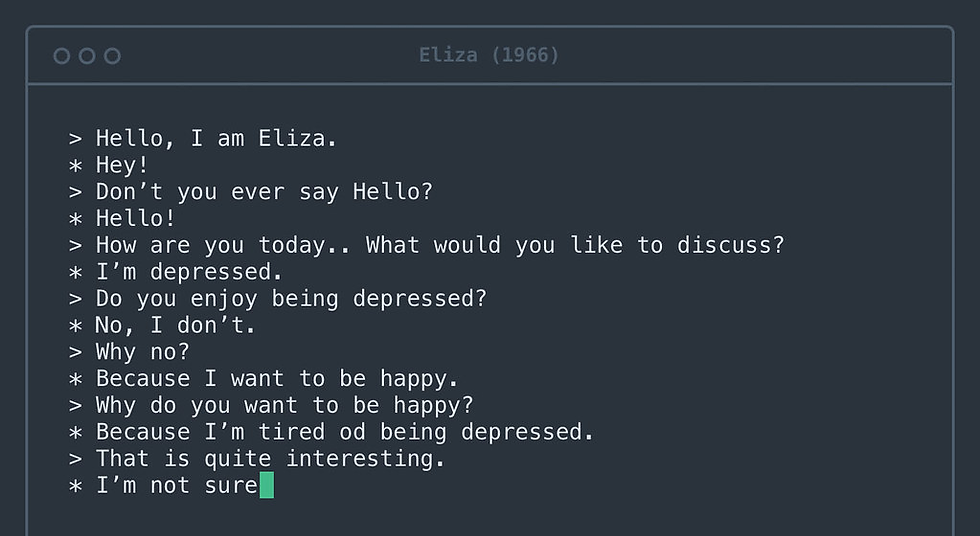
ELIZA, released by Joseph Weizenbaum in the 1966, was the first machine to past the Turning test. ELIZA is a chatbot designed to act like a psychiatrist. She was able to pass this test by reflecting each question the user asks back onto them as another question. This method proved to be highly efficient in starting a somewhat engaging conversation, however, ELIZA was never able to actually provide any meaningful responses to its users, she would rather prompt her users to find the solution themselves.
Replika
Replika is an Artificial Intelligence platform that takes the form of an interactive, personalised chatbot. It learns how to 'replicate' genuine human interaction through conversations with the user who created them.
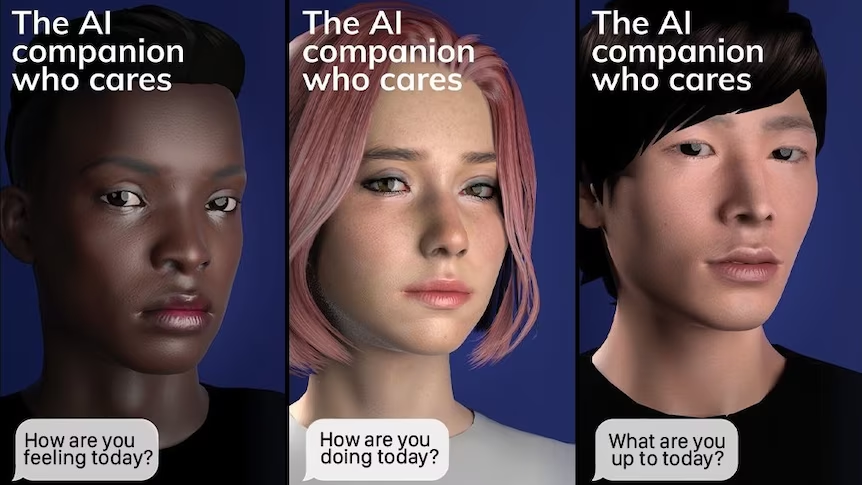
It was developed by AI start-up Luka in 2017, as a way to reconnect with a loved one who had passed away. Replika has reached over 10 million users worldwide after seeing a massive popularity increase during the global pandemic.
However, does replika pass the original Turning test? It appears so, replika is able to form these parasocial bonds with humans, meaning that it has the ability to fool its users into believing the program is also human, at least to some extent. Despite that, the ai itself with no outside input that is most likely using pre programmed messages and without that training it doesn’t have the ability to personalize itself. This means that its ability to appear human doesn't mean that the program is actually any close to reaching human intelligence.
Algorithms Of Oppression
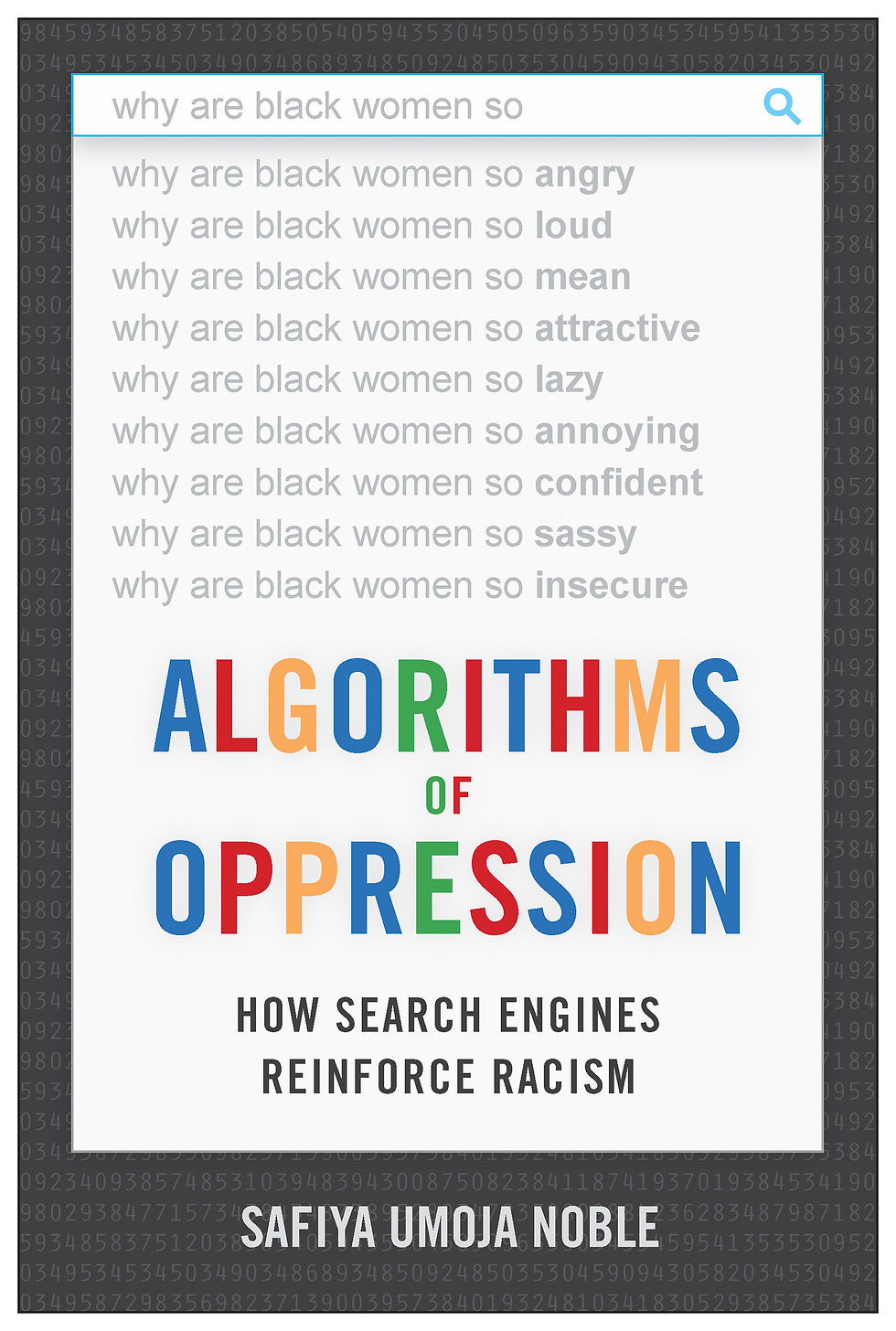
The Algorithms Of Oppression is about the power of algorithms in the age of neoliberalism and the ways those digital decisions reinforce oppressive social relationships and enact new modes of racial profiling.
Part of the challenge of understanding algorithmic oppression is to understand that mathematical formulations that drive automated decisions are made by human beings.


Comments