Trimester 2 - Major Project
- Julia Toczyska
- Feb 27
- 12 min read

Updated: 3 days ago
For my major project of Digital Media Production, I have chosen to explore one area of my skillset that I felt as though I haven’t given enough justice - that being video editing. And with that point in mind, I have set off to create a documentary centred around the American McGee's Alice franchise, a series that has inspired me for years. In this blog post, I will go over my creative process of bringing my very own documentary to life.

My Aims and Intentions
Whilst settling on an idea for my documentary, I knew I wanted to make my work stand out on a personal level. I know of many fantastic video essays and documentaries exploring the works of American McGee, however, for the purpose of this project I have decided to abstain from watching any of them for multiple reasons. Firstly, I want to avoid indirectly influencing my writing or visual approach. I think when you deeply admire a creator, it becomes very easy to subconsciously echo someone else’s interpretation of their story. Secondly, and perhaps more honestly, I wanted this documentary to feel like my conversation with McGee’s work, rather than a response to someone else’s.
For lack of better words, I could describe McGee as my idol. His reinterpretation of classic literature through a darker lens has always resonated with me creatively. The world building, the visual symbolism, and the unapologetically gothic tone of American McGee's Alice and Alice Madness Returns shaped the way I think about storytelling in video games. Because of that personal attachment, this project feels less like an academic requirement and more like a long overdue tribute.
Inspiration
A major spark of inspiration for this documentary came after watching Pyrocynical’s video essay on Darkwood. While I am not aiming for that scale of production, especially considering that his video reportedly took months and months to create (and is about 8 hours in length...), I was incredibly inspired by that style of YouTube journalism. The way gameplay, commentary, and analysis all together felt not only cinematic but personal. That is the standard I was aspiring towards.
Concept
To create roughly a 30-minute video documentary about the life and works of American McGee
To write, voice, film, and edit the video documentary
To rig and animate a 3D digital avatar that will act as a persona throughout the documentary
Through this process, I aim to expand on my video editing skill, as well as explore new pieces of software such as Blender. Coming into 3D works on an entry level, I believe this project will allow me to develop further as a creative practitioner.
Target Audience
The target audience for this documentary primarily consists of people who are already familiar with, or interested in, the works of American McGee and the American McGee's Alice series, including its sequel Alice Madness Returns. Fans of the franchise often engage with discussions surrounding its themes, visual design, and the history of its development, which makes them a natural audience for a documentary exploring both McGee’s life and his creative work.
However, the documentary is not intended solely for existing fans of the series. It is also aimed at viewers who enjoy long form YouTube video essays and analytical deep dives into media. Creators such as Pyrocynical have popularised this style of content, where games are explored not only through gameplay but also through narrative analysis, production history, and cultural context. Because of this, the documentary may also appeal to viewers who simply enjoy in-depth discussions about video games and the creative processes behind them, even if they are not already familiar with the Alice franchise.
By targeting both existing fans and viewers who enjoy analytical gaming documentaries, the project aims to reach an audience that appreciates thoughtful storytelling, research, and creative editing within the format of a video essay.
Demographic Research

From a demographic perspective, YouTube audiences tend to gravitate towards younger adults, with the 18-34 age range forming one of the largest and most active groups on the platform. Additionally, younger viewers (18–29) are among the most frequent consumers of online video content overall, making them a key audience for this type of project. However, long form analytical content often attracts slightly older viewers within this range, particularly those who are interested in media analysis, gaming culture, and video essays.
User Persona
To better define this audience, I created a user persona that reflects the type of viewer I am aiming to reach:
Age: 22
Occupation: University student (creative/media related course)
Interests: Video games, YouTube essays, digital art, storytelling
Platforms: YouTube, Discord, Reddit
Behaviour and Habits: Regularly watches long form YouTube videos while studying, relaxing, or multitasking. They are subscribed to creators like Pyrocynical and actively seek out video essays that go beyond surface level commentary. They are less interested in quick entertainment and more drawn to content that feels informative, immersive, and well researched.
Motivations:
To gain a deeper understanding of games they enjoy
To discover new perspectives on familiar media
To feel engaged by a creator’s personality and storytelling style
Frustrations:
Tutorials or videos that assume too much prior knowledge
Content that feels repetitive or overly generic
This persona reflects both the audience for my documentary and the tutorial content I created alongside it. Ultimately, the goal is to produce something that feels engaging and informative, while also being approachable and relatable to students or creators who are in a similar position to myself. My purpose is to entertain, engage, and even educate.
Schedule
To stay organised, I have developd a rough schedule that I have strictly followed during my development process:
January/February: Script Writing
Late February/March: 3D Moddeling and Rigging
April: Video Editing
Script Writing
Before I've begun any further work, I set my mind on developing a detailed script that will function as a guide into development. I've spent multiple weeks reading through relevant articles (some referenced at the end of the PDF embeded below) to base my information on, ensuring my information is accurate and respectful. I made sure to keep in some comedic elements, and some bits of my own sarcastic humour to lighten up the mood when it felt appropriate.
Use of a Digital Avatar
One of the key creative decisions I made for this project was to develop a digital avatar to act as the narrator throughout the documentary. This avatar, based on an early model of Alice Liddell.

The primary reason for including a VTubing style avatar is to add personality and a unique point of engagement. Traditional video essays often rely on voice over narration alone, which, while effective, can sometimes feel distant. By introducing a visual persona, I aim to create a stronger connection between the narrator and the audience. The avatar allows for subtle expression, movement, and tone that reinforces the mood of the documentary, particularly given the gothic and psychological themes associated with American McGee’s work.
Additionally, the use of an avatar helps the project stand out within a highly saturated genre of YouTube deep dives. Many creators focus heavily on editing, research, and scripting, but fewer incorporate a consistent on screen identity that blends performance with analysis.

Beyond its creative purpose, developing this avatar has also allowed me to expand my technical skillset. Through the process of creating a VTuber model, I was able to learn how such avatars are built, prepared, and implemented for use in video. As a result, the avatar is not only a stylistic choice, but also evidence of my learning process and willingness to explore new areas within digital media production.
Making of the 3D Model
Alongside the documentary, I also produced a 10 minute tutorial video documenting how I converted an unused Alice Liddell model into a VRM avatar suitable for VTubing. The purpose of this video is not only to showcase the technical side of my project, but also to act as a resource for other students or beginners who may want to attempt something similar.
During my own process, I found it difficult to locate clear tutorials that specifically covered converting an XPS model into a VRM format entirely within Blender. Many guides either skipped key steps or assumed prior knowledge that I did not have. Because of this gap, I decided to document my experience in a way that would be accessible to others in a similar position. The tone of the tutorial is intentionally informal, with the inclusion of humour and more relaxed commentary. This was a deliberate choice to make the content feel less overwhelming, especially for beginners who might find Blender intimidating. (Please watch the video linked below for my Blender documentation process)
Creating this tutorial was also a neat excuse to learn DaVinci Resolve, a software I chose for this project. Due to my confidence with Adobe software, I wanted to expland on my skillset and learn another editing program often used, or even preferred, within the industry. My experience with resolve was incredibly positive, I found it more way more intuitive than Premiere Pro, a program I typically used in the past, however that is entirely due to personal preference.

3D Model in VRM Format - CLICK ME
Mid-Way Presentations
Warudo Setup
As mentioned in my tutorial, I chose Warudo as my motion tracking software. To set up Warudo with my model, I first went to the Character tab, opened the "Characters Folder", and dragged the VRM file previously exported from Blender into the directory. Straight afterwards, still within the Character tab, I navigated to the Motion Capture section and selected "Setup Motion Capture".

For my model I chose OpenSeeFace as my face tracking option. I have decided to track my characters mouth movements strictly based off of my microphone inputs for best results. Then, using the Blueprints system, I calibrated the phonemes to better match my own speech patterns, ensuring that the avatar’s lip syncing appeared more natural and less exaggerated.


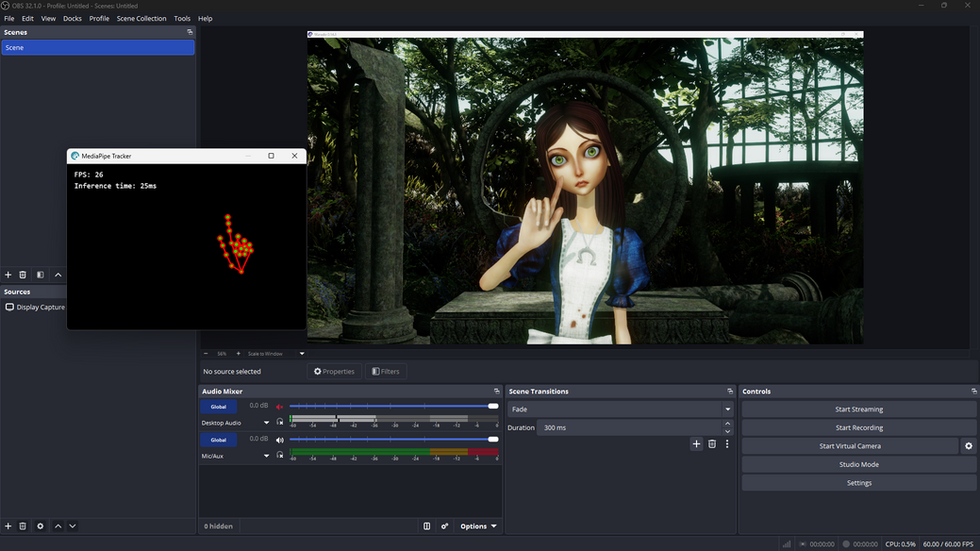
Additonally to face tracking, I have also set up pose tracking using MediaPipe, mostly because I was intrigued by the hand tracking feature. For accurate camera tracking and movements, I have followed this tutorial by Gillie Amanita on YouTube.
Recording Process
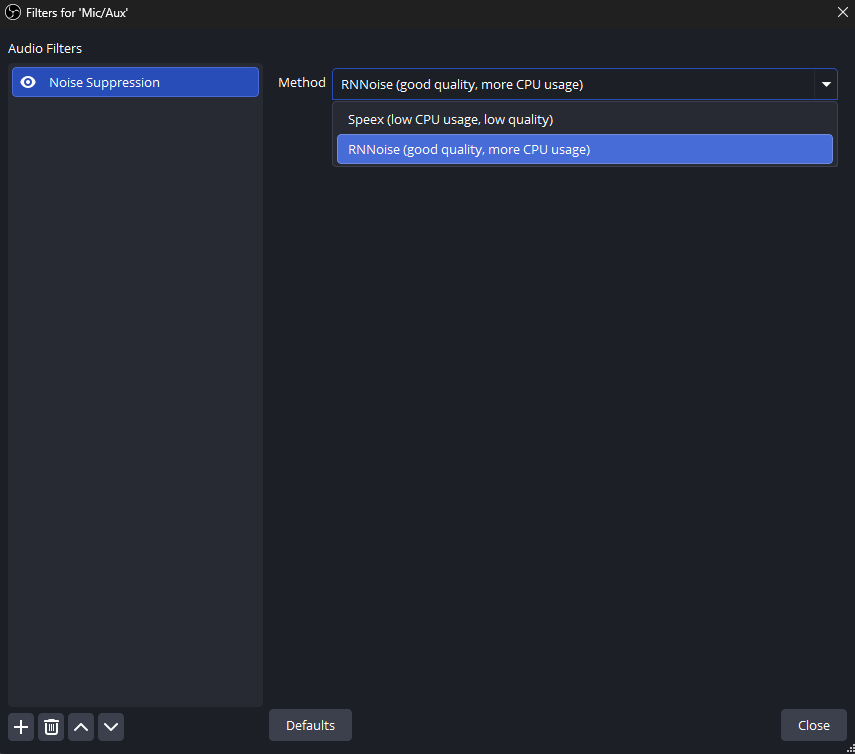
Similarly to the YouTube tutorial, I used OBS Studio to record my documentary. Interestingly, I had never actually used OBS before this project, so this was another new thing I had to pick up along the way. Thankfully, the setup itself was very much straightforward. I used my HyperX QuadCast S microphone and recorded one of my screens, with Warudo open on one monitor and my script on the other. This made it easy to stay on track while recording, without having to constantly switch between windows. I also made sure to enable noise suppression on my microphone. This helped clean up the audio from the start, which will make things a lot easier later on during editing, especially in the audio department.
Although I did set up hand tracking, in the end I found it too unreliable to use. The result felt too "awkward" at times, and I found it easier to rely on Warudo's animations rather than live hand tracking. While disappointing, I am still excited to use hand tracking in an exhibition scenario, particularly during the degree show.




DaVinci Resolve
When it came to editing the documentary, I found DaVinci Resolve really refreshing to work with. It felt like a solid mix between Adobe Premiere Pro and Adobe After Effects, providing advanced features when needed. I started off by working with the clean recording of my avatar going through the script. I trimmed down pauses and breathing in between dialogue to improve the overall flow. The original recording was around 40 minutes long, but I quickly realised I repeated myself quite a bit, so I ended up cutting it down to roughly 30 minutes.

Once I had a tighter base, I began layering in footage from American McGee's Alice and Alice Madness Returns to better contextualise what I was talking about, footage which I have recorded prior using OBS. I also included several older interviews with American McGee, which added a really nice extra layer to the documentary and made it feel more grounded and authentic. One of my biggest takeaways from the whole editing process was honestly not to underestimate the power of music. There were moments where the video felt a bit empty, but adding a subtle, relaxing track in the background made a huge difference and helped achieve the tone I was aiming for.
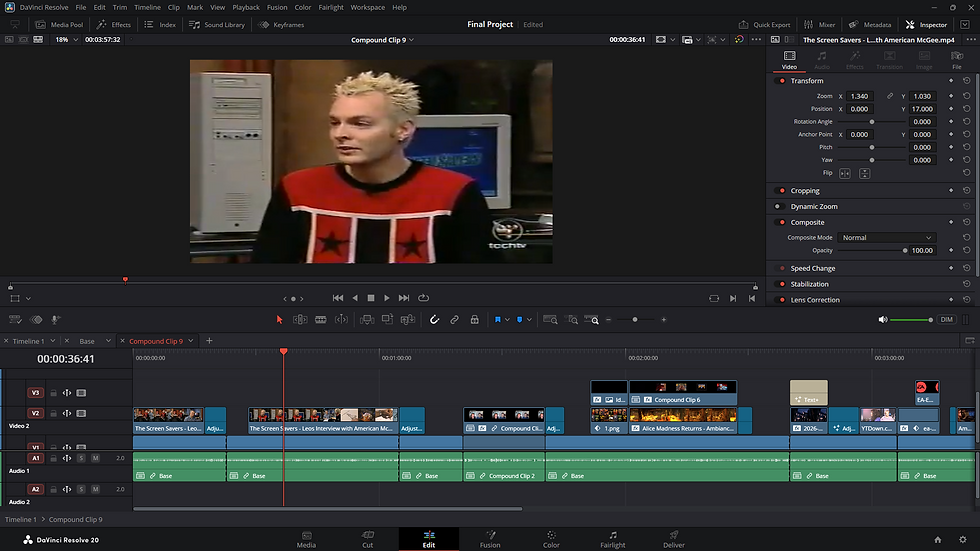
To keep everything organised, I divided the documentary into sections based on my script and edited them using compound clips within DaVinci Resolve. This made the whole project much more manageable and helped avoid cluttering the timeline. I actually learned this the hard way after accidentally deleting parts of my work early on (painful lesson), which forced me to redo sections. But in the end, it pushed me to develop a more structured and efficient workflow. In the end I have scructed myself to do a section of the video per day, ammounting to a 15 day editing process.

I have additionally utalised zoom to add some dynamic motion throughout the video to make the my documentary appear less still. I believe adding motion to exaggerate narration complemented the overall flow. I have created this effect using an adjustment layer and playing with DaVinci's Fusion. Using an adjustment layer allowed me to copy and paste the effect throughout the timeline without having to jump into fusion each and every time, which saved me a lot time.

Captions
Once I was done with editing in DaVinci Resolve, I've quickly jumped into Premiere Pro to transcribe and add captions. Unfortunately, while the free version of DaVinci Resolve offer a wide range of tools, captions aren't one of those free features. While adding captions wasn't necessary per say, I do believe they helped to add that final touch to the documentary. Many video essays I've watched over the years dont bother with manual captions, and often depend on YouTube generated ones. While effective, I did enjoy having a level of control over the captions apperance. Additionally, captions have become a somewhat of a standard over the years. They adds that extra level of accessibility that is important to ackwoledge.

Apart from using Premiere for captions, I have additionally adjusted the volume of the video while looking at audio levels, ensuring that the video is both not too quiet and loud. The ideal spot was staying pretty consistently on the yellow zone.
Thumbnail

Outcome
Final Thoughts
Looking back over this project, I do have a lot on my mind. While I wanted to end my university journey on a bang, with a massive ambitious project, I am not entirely satisfied with all aspects of this project. I went in with an intent to create something deeply meaningful, a tribute to an creator who has majorily influenced my appriciation of art. And I do believe I have acheved just that. The documentary is honest, it covers many of my growing frustrations with the creative industry. And perhaps most importantly, it trurly came from my heart. However, there are many things I wish I've done better, or haven't done at all. I do believe many artists at some point face this hard truth. While an idea can sound amazing on paper, the execution can sometimes differ. In my case, I absolutely loved the idea of making the digital avatar, and I am incredibly proud that I have managed to do so after hours and hours of trail and error, sleepless nights, and even frustrations at times. But in the context of my final outcome, I do feel like I haven't utalised the avatar enough. There's many moments in the video where I feel like the avatar appears out of place, and even cringe at times for the lack of a better word. I love the avatar in the context of a physical exhibition, and I am very much excited to display it on my upcoming degree show, however I cannot shake the feeling like I could've done better. Additionally, I do believe adding more expressions to the model could've improved on these issues. On the other hand, making facial expressions for emotions like happiness, anger, and sadness would've massively impacted my schedule, and would have been extremely difficult considering the model's complexity.
However, despite my conflicting feelings, I have absolutely enjoyed all the learning I have done for this project. The anxiety was there, learning Blender over the course of multiple weeks, exploring what Warudo has to offer, and stepping out of my comfort zone and familiarity with DaVinci Resolve felt like an adventure of a sort. I am honestly taken back by the ammount of nights I spent watching YouTube tutorials, reading online forums, and stubbornly playing around with different programs in hopes of finding solutions on my own. It was a challenge, but overcoming every small (or catastrophic) issue felt more and more rewarding each time. Perhaps its the passion and adrenaline that really drives my craft, and I never want to lose those. Comparing both my Blender tutorial video to the final documentary only further highligths to me how much I have improved inside of DaVinci Resolve over the past couple of months.
One of the most rewarding aspects of this project was putting my Blender tutorial on YouTube. Reading comments on that video made me so incredibly happy. Putting work out there, wheather it's the internet or physical set up, is always anxiety inducing, but the positive feedback that comes with it is beyond worth it. I absolutely cannot wait to publish my documentary as soon as I am done with this blog post, and hopefully it will reach its intended audience out there. Thus far, I have shown the video to some of my friends. Feedback was mostly positive, they enjoyed the energy I put into making it. Some did mention that my voice did sound a bit monotonous which is something I didn't realise in the slightest! I did aim for precise clarity. This isn't an entirely bad thing, it is often a standard in long form deep dives, and many enjoy this form of narration as it can appear quite calming, but it was interesting none than less to have my friends point this out.
To take my work further, I have considered making multiple TikTok like shorts to post on social media to gain traffic to my video. If I had more time I would've taken snipits of the video and posted them on social media. This is a technique I have seen around social media.
So, overall this project was a lot to take in. It is almost hard to believe that the 4 months I spent on this project came to an end. I have things I wish I could have polished out more, but I have learned that sometimes it is important to let go of perfection, and embrace work for what it represents. And in this case, I believe that this project represents my love of craft. And I hope that beyond university, this mindset of mine will never change.
Comments