

Camera Angles and Story Telling
- Julia Toczyska
- Dec 22, 2023
- 2 min read

Updated: Mar 19, 2024
Whilst doing the research for our music videos, we were asked to analyse the ways in which camera angles are effective in visual story telling.
In this post, I will be exploring the ways in with the Netflix show Arcane has succeeded in their use of camera angles in order to portray a particular issue or an element of narrative.
Establishing shot
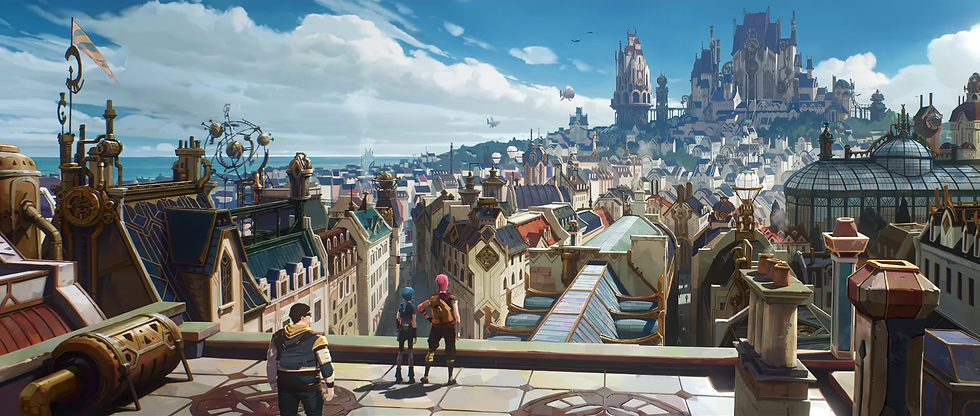
Throughout the show, Arcane uses a range of establishing shots in order to familiarise its audience with the environment that the story takes place in. One of my favourite establishing shots from the show is used in the very first episode that I have attached above. The said shot is not only pleasing to look at with its steampunk-like aesthetic, it also serves a purpose of foreshadowing a binary opposition, as the audience is yet to discover the underground city of Zaun.
Full shot
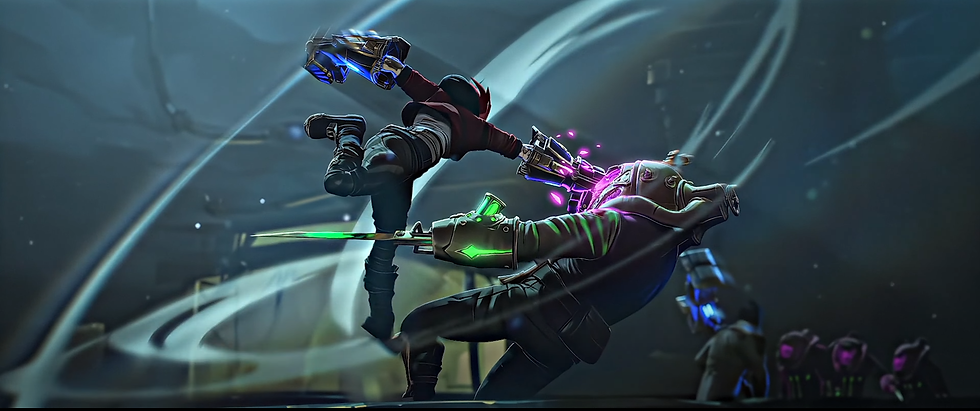
Full shots are a great way to capture action driven scenes. It is wide enough to show a character's entire body in context, allowing the audience to make connections between characters, their surroundings, and the story. Many of Arcane's action scenes use full shots to familiarize audiences with both sides of the conflicts, giving viewers a better understanding of what each scene conveys.
Over the shoulder
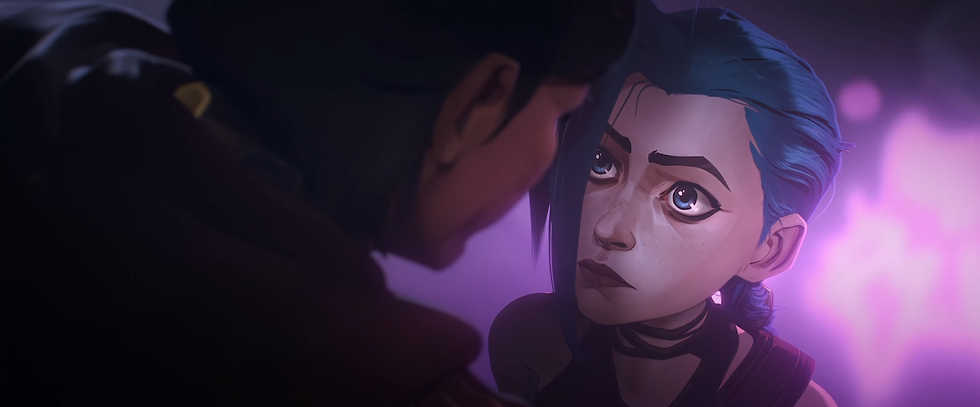
Over the shoulder shot, also known as an OTS, is a camera shot that captures one character from behind and just over the shoulder of another character, giving the viewer a third-person perspective of the scene. OTS shots can profoundly influence how the audience interprets a scene, especially during conversations between characters. During this scene, OTS was used to show the relationship between these two characters. The difference in height paints Jinx (blue-haired girl) as if she has little to no agency, however, her glare creates a great sense of tension and further conflict between them.
Close up
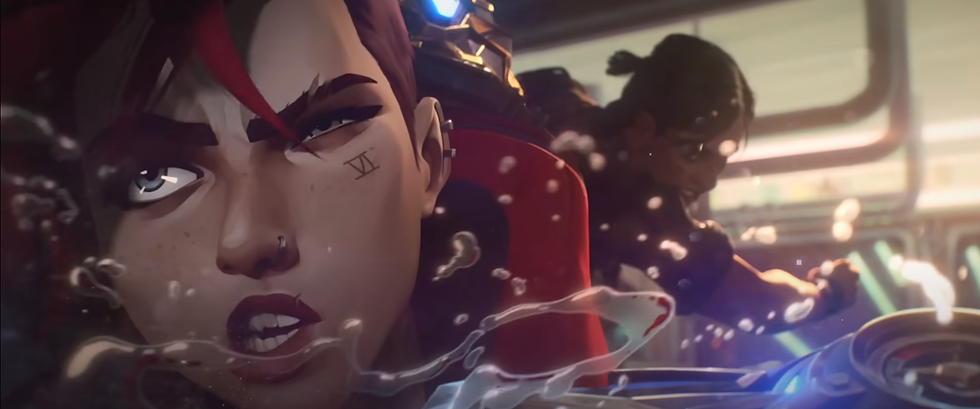
A close-up shot, which tightly frames an character's face to make their reaction the main focus, is a type of tight camera shot in film and television that adds emotion and intimacy to a scene. The use of close-ups allows the audience to see fine details in the character's expressions, establishing a strong emotional connection that would not be possible with a wide, long, or full shot. I have really enjoyed how Arcane used close-ups in order to create impactful combat scenes. From the exaggerated facial expressions, and the complete detail such as spit (as it can be seen above), we as an audience can almost physically feel how hard that punch really was.
Bird's Eye View
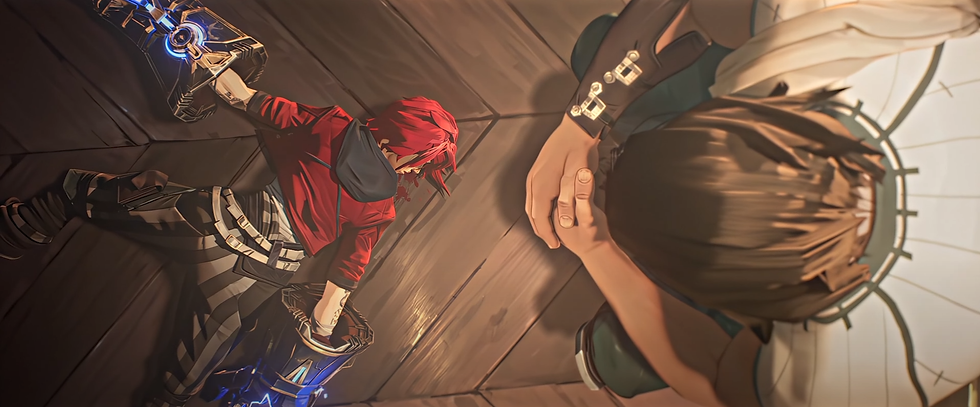
When filmmakers use high or low angle shots, they make a statement about power dynamics on screen - who has control of the scene and who does not. This same principle of visual symbolism applies to bird's-eye view shots. In this scene, the red-haired girl lies powerless on the floor, visualising her defeat. Her deceased father figure appears over her, possibly symbolising either guidance or failure. Positioned above her, he represents the struggles she faces living up to his legacy.


Comments